
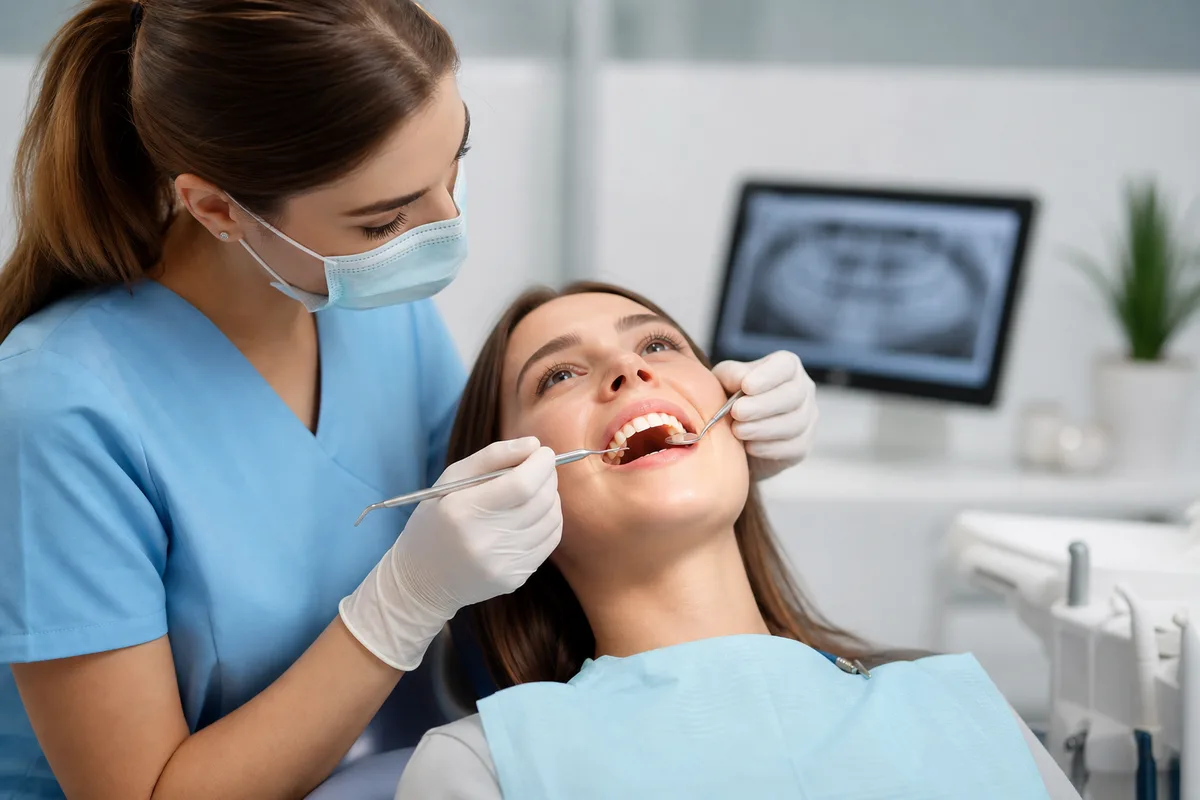
Have you noticed a pink tint in the sink after brushing or flossing your teeth? Or perhaps during your last routine checkup, the hygienist called out numbers like “4, 5, 4” while measuring your gums and mentioned you need a “deep cleaning.”
Hearing that you need specialized gum therapy can raise questions: Is this really necessary? Can’t I just get a normal cleaning? What is the difference between gingivitis and periodontitis?
At TruCare Dentistry Roswell, Dr. Toral Ardeshna and our gentle hygiene team believe in patient education without pressure. Located on Coleman Road near the Roswell and East Cobb border, we help families protect their teeth for life by identifying gum inflammation early.
Here is what you need to know about the biological progression of gum disease, what those numbers mean, and when scaling and root planing is vital for saving your teeth.
Gingivitis vs. Periodontitis: Understanding the Two Stages
Gum disease is not an all-or-nothing condition—it exists on a progressive spectrum. Knowing where you stand determines what type of treatment will protect your smile:
| Characteristic | Gingivitis (Stage 1) | Periodontitis (Stage 2+) |
|---|---|---|
| Tissue Affected | Gums only (gingival margin) | Gums, periodontal ligament, and jawbone |
| Bone Loss? | No bone loss | Permanent bone loss around teeth |
| Reversibility | 100% Reversible | Manageable, but lost bone cannot regrow naturally |
| Pocket Depths | 1 to 3 mm (normal) | 4 mm, 5 mm, 6 mm, or deeper |
| Common Symptoms | Redness, bleeding during brushing | Bleeding, bad breath, gum recession, loose teeth |
| Treatment Required | Standard cleaning (prophylaxis) + home care | Deep cleaning (scaling & root planing) |
1. Gingivitis: The Warning Siren
Gingivitis occurs when plaque—a sticky biofilm of food particles and oral bacteria—remains along the gumline. Within 24 to 48 hours, unremoved plaque hardens into calculus (tartar), which cannot be brushed away at home. The bacteria release toxins that irritate the delicate gingival tissues, causing them to appear red, puffy, and prone to bleeding.
The crucial takeaway: In gingivitis, the infection is confined to the soft gum tissue. The underlying bone and collagen ligaments anchoring your teeth are completely intact. A standard professional cleaning removes the calculus, allowing the gums to heal completely.
2. Periodontitis: The Chronic Bone Infection
When gingivitis is left untreated, the bacterial colonies advance beneath the gumline. Your immune system responds by sending white blood cells to fight the infection. However, the chronic inflammatory battle breaks down the periodontal ligament and dissolves the supporting jawbone.
Once bone loss occurs, the gum tissue detaches from the tooth, forming empty gaps called periodontal pockets. As these pockets deepen, anaerobic bacteria flourish in the oxygen-deprived space, accelerating tooth loosening and eventual tooth loss if not professionally intervened.
What Do the Numbers Mean? Understanding Periodontal Pocket Probing
During your comprehensive exam at TruCare Dentistry, Dr. Toral uses a miniature, blunt dental instrument called a periodontal probe to measure the depth of the space between your tooth and gum in millimeters at six points around each tooth:
- 1 to 3 mm (Healthy): The gum collar fits snugly against the enamel. Tissues are pink, stippled, and do not bleed. A routine 6-month preventive cleaning is appropriate.
- 4 mm (Early Warning Zone): Plaque and tartar have begun migrating beneath the gumline. Mild inflammation is present. If there is no bone loss on digital X-rays, aggressive home flossing and targeted debridement may reverse it.
- 5 to 6 mm (Active Periodontitis): Hardened calculus deposits adhere deep along the root surfaces. Bone resorption is visible on X-rays. A standard cleaning cannot physically reach the bottom of this pocket. A deep cleaning (scaling and root planing) is clinically necessary.
- 7 mm or deeper (Advanced Periodontal Disease): Severe bone loss with potential tooth mobility. Requires deep cleaning, localized antimicrobial medication, and potentially referral for surgical regeneration.
What Happens During a Deep Cleaning (Scaling & Root Planing)?
If you have periodontal pockets of 4mm or deeper with tartar beneath the gumline, performing a superficial standard cleaning is like mopping the floor while leaving a burst pipe behind the wall. It polishes the visible crown while the infection continues destroying the root foundation.
A deep cleaning is typically completed over one or two comfortable visits:
Phase 1: Ultrasonic Scaling
Using an ultrasonic scaler emitting gentle micro-vibrations and a soothing water spray, our hygienist meticulously breaks up hardened calculus and bacterial biofilm above and deep below the gumline.
Phase 2: Root Planing
Next, fine hand instruments are used to carefully smooth (plane) the rough micro-grooves on the root surfaces of your teeth. Harmful bacteria cling easily to rough cementum. Smoothing the root removes residual toxins and creates a pristine, smooth surface that allows the gum tissue to reattach snugly to the tooth root.
Phase 3: Antibacterial Irrigation
The pockets are flushed with therapeutic antibacterial rinses (such as chlorhexidine) to eliminate lingering pathogens and accelerate cellular healing.
Is a Deep Cleaning Painful?
Patient comfort is our top priority at TruCare Dentistry. Before beginning:
- We apply topical numbing gel followed by localized anesthetic so your gums, teeth, and roots are completely numb.
- You will feel gentle vibration and water irrigation, but should not feel sharp pain.
- For patients with heightened anxiety or sensitive teeth, nitrous oxide or gentle oral relaxation options are always available.
Following the procedure, your gums may feel slightly tender for 24 to 48 hours, and teeth may be slightly sensitive to cold liquids. Rinsing with warm salt water and using a sensitive-teeth toothpaste easily relieves any mild post-op sensation.
The Systemic Connection: Your Gums and Your Overall Health
Modern medicine confirms that the mouth is the biological gateway to the rest of your body. Periodontal disease is not merely a dental inconvenience—it is a chronic bacterial infection:
- Cardiovascular Disease: Oral bacteria from infected gums can enter the bloodstream through ulcerated pocket linings, contributing to arterial plaque formation and increasing the risk of stroke and heart attack.
- Diabetes: Gum disease and diabetes share a bidirectional relationship. Severe periodontal infection raises systemic blood sugar levels, while high blood glucose impairs the body’s ability to heal gum infections.
- Respiratory Health: Inhaling oral bacteria from diseased gums into the lungs can elevate the risk of respiratory infections.
By arresting periodontal infection through scaling and root planing, you protect not only your smile, but your systemic health.
Protect Your Smile: Schedule a Gum Health Evaluation in Roswell
Bleeding gums are a treatable symptom, not a permanent fate. Catching gum disease early prevents painful emergencies, tooth loss, and costly surgical restorations down the road.
If you have noticed bleeding while brushing, persistent bad breath, or haven’t had a dental checkup in over a year, let Dr. Toral Ardeshna and our experienced team evaluate your gum health in a warm, welcoming environment.
Call (678) 321-7575 or request your visit online at TruCare Dentistry Roswell today.
“Bleeding gums when you brush or floss is not normal—it is the earliest biological indicator of bacterial inflammation that requires clinical attention before bone loss begins.”
Frequently Asked Questions
What is the primary difference between a regular cleaning and a deep cleaning? +
A standard dental cleaning (prophylaxis) cleans the visible crown portion of teeth above the gumline in healthy mouths or early gingivitis. A deep cleaning (scaling and root planing) is a specialized therapeutic procedure that removes hardened tartar and bacterial toxins below the gumline on the root surfaces when periodontal pockets measure 4mm or deeper with active bone loss.
Does a deep cleaning hurt? +
No. At TruCare Dentistry, we prioritize patient comfort. We thoroughly numb the gums and tooth roots with gentle local anesthesia prior to treatment. Patients rarely experience sharp discomfort during the visit, and mild post-procedure sensitivity can be easily managed with warm salt water rinses or over-the-counter pain relievers.
Can gingivitis be cured completely? +
Yes. Gingivitis is the early, reversible stage of gum disease where bacterial plaque causes swelling and bleeding, but has not yet degraded the underlying jawbone. With a thorough dental cleaning and disciplined daily brushing and flossing, your gum tissue can return to 100% health.
Why do periodontal pockets matter? +
In a healthy mouth, the sulcular collar of gum tissue hugs snugly around each tooth, measuring 1 to 3 millimeters deep. When bacteria accumulate and trigger inflammation, the gum attachment pulls away, creating deeper pockets (4mm, 5mm, or 6mm+). These deep spaces cannot be reached with a regular toothbrush or dental floss, allowing anaerobic bacteria to destroy bone unless professionally cleaned.
How often do I need cleanings after undergoing a periodontal deep cleaning? +
Following scaling and root planing, patients transition to a 'periodontal maintenance' schedule, typically every 3 to 4 months instead of the standard 6 months. Frequent maintenance cleans the pockets before virulent anaerobic bacteria can re-colonize and initiate further bone destruction.
Schedule Your Visit in Roswell, GA
Same-day emergency appointments available. Serving Roswell, Marietta, and East Cobb.